Total Pageviews

Monday, January 30, 2006

NAIS and the Chinese Chicken

It's a banner day for posting it seems. So much to talk about.

here is another item about NAIS and the USDA. This is truly shocking.

While the USDA foists NAIS on American consumers, farmers and livestock* the US Department of Agriculture (USDA) is proposing importing chickens from China. Yes, that’s right. Is that crazy enough? They want to tag and track all animals in the USA to prevent disease’ and then import poultry from China where Avian Bird Flu (H5N1) has been killing millions of birds as well as some people. Wait a minute?!? Wasn’t one of the justifications for NAIS to stop the spread of Avian Bird Flu???

Not only that, but the USDA wants to ship poultry to China, have it slaughtered and canned and then shipped back to the USA for consumption! What!?!

Does this make sense? Wait… sense… cents… Ah, think dollars!...

read the rest at Ag Dept Wants to Import Chickens from China


Our government is insane. First they want to implement the NAIS in part to keep the US from getting avian flu outbreaks and now they want to import chicken from china where there have been numerous avian flu outbreaks. This is nuckin' futz.

Planting Time Nears

I made our first batch of potting soil, or is it soiless mix (the stuff has no soil in it though it is supposed to) for the soil blocks that will be made in which to plant seeds.

The mix is basically 2 parts peat moss, 1 part compost. 1 part perlite and than some wood ash (1 cup) to moderate the pH and some kelp, colloidal phosphate and green sand tossed in (about 2 cups).

In the past we had to do this job either in the basement or outside. It's not a bad outside job as long as the weather is decent (above 45F, calm and not raining/snowing) but considering the bulk of the mix is made and used in March and early April those nice conditions are rare (though not this year). We found we could not do this job in the house (other than the basement) because of the dust factor. peat makes a lot of dust, enough to cover most things in the house with 1/4" layer of peat dust.

You see, in order to make this mix, all ingredients must be screened (sifted) through a 1/8th inch screen so that the mix is fine and free of chunky/lumpy material. and the screening process makes a lot of dust. So much that you cannot do this job without breathing protection, even if you are in a well ventilated area. I tried this once, screening peat in the basement with no mask, and I was coughing up chunks of peat out of my lungs for a couple of weeks. Breathing was tough the first couple of days after that experience. Will not be doing that ever again.

And I don't have to because we now own a big barn that is well ventilated and out of the weather. It's great! it was so easy to screen ingredients and than mix them together. I got dirty as hell except for the white circle around my nose where the mask was. Now just have to find something to plant. I guess onions and leeks will be the first seeds to be planted and we will go from there.

On farm Archaeology

I have been interested in archaeology for about 23 years. It all started in my lost years hanging out with a guy named Geoff Georgiady who introduced me to the wonders of walking around in bare muddy farm fields looking for points while drinking cheap beer.

At the time I was not in school and Geoff encouraged me to enroll at Miami and take a class from Dr Ron Spielbauer and I did and that was my first step towards getting a degree in anthropology at Miami U.

This in turn was the move that later in life (15 years later) would enable me to apply for and get a contract archaeology job where I would meet my future husband and farming partner, Eugene. Much of our Honeymoon consisted of seeing great earthworks of Ohio.

Jump forward from 1983 to 2006 and out new farm that is situated on a really hot area for potential archaeological finds.

Within days of moving both Eugene and I noticed a lot of chert eroding out of a hill side. At first we thought it was all brought in from somewhere else but now we are both thinking we have an honest to goodness outcropping of chert that has obviously been mined for a lot of years. And it is as high quality as the cherts coming from Flint Ridge over by Columbus/Newark.

Than Eugene started finding broken points in the beds he has been digging up. So far he has found 2 one tip and one base. I would go and look for heads but was unsuccessful until yesterday afternoon when I was looking at a freshly dug bed that had been well washed by overnight heavy rains and after walking the beds and looking for a half hour there was a nice point sticking out of the mud. I grabbed it and found myself in the possession of the top 1/3 of a serrated spear point made from the same material that the two Eugene has found. makes me wonder if the same person made all the points. We will never know the answer to that question.

Now it is tempting to forget farming and start putting in some units. There is definitely a site here and it just may be a significant one but the problem is finding someone who is qualified to do a project here. Eugene knows how to do the work, the research and write the papers but he does not have the Ph.D. to qualify his work (not to mention this would be pro bono work and we cannot afford to do that at this point in time-have a mortgage to pay). I am thinking about contacting my alma mater and asking them if they need a place to do their field school and offer up our place for digging for 8 weeks every summer until it is done.

All I know is something should be done about this potential site.

Sunday, January 29, 2006

Spanning the Blogosphere

I am a member of Blog Explosion so I can increase traffic to my blog (and BE is a very effective tool to do this. To join click on the icon at the bottom of the sidebar to the right). I surf for credits most days via BE and often I find some really great blogs (in my opinion). And today is just such a day. 10 minutes surfing and I hit pay dirt starting with the Matian Anthropologist which lead me to a blog call Who Would Jesus Hate (if you are religious or still believe GW Bush is a good leader or do not have a sick sense of humor I would suggest NOT looking at this blog).

Another blog I found this morning while using Technorati's search engine is Towards a Bioregional State is all about changing our society from an unsustainable one to a sustainable state. I have only scanned 2 of the articles posted but I like the ideas I have read so far. One of the reasons I do what I do is guide our society in this direction. And for you Monsanto fans out there there is a really good article on the History of Monsanto and how the corp. got to be so evil

Saturday, January 28, 2006

Making a Market Garden

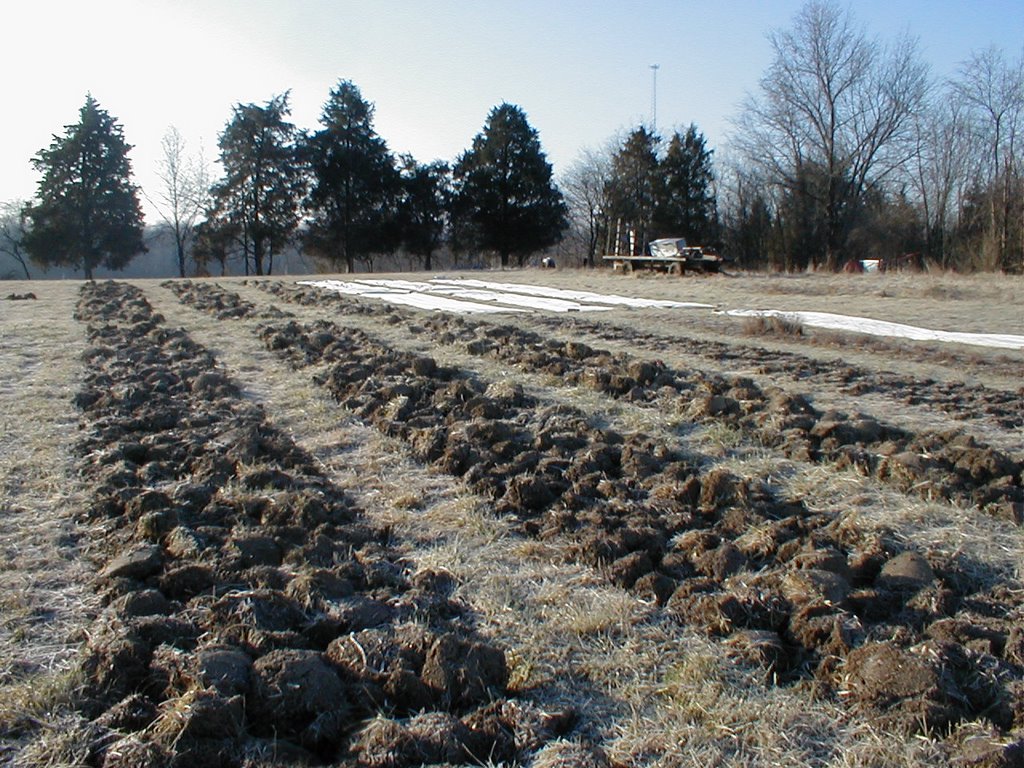
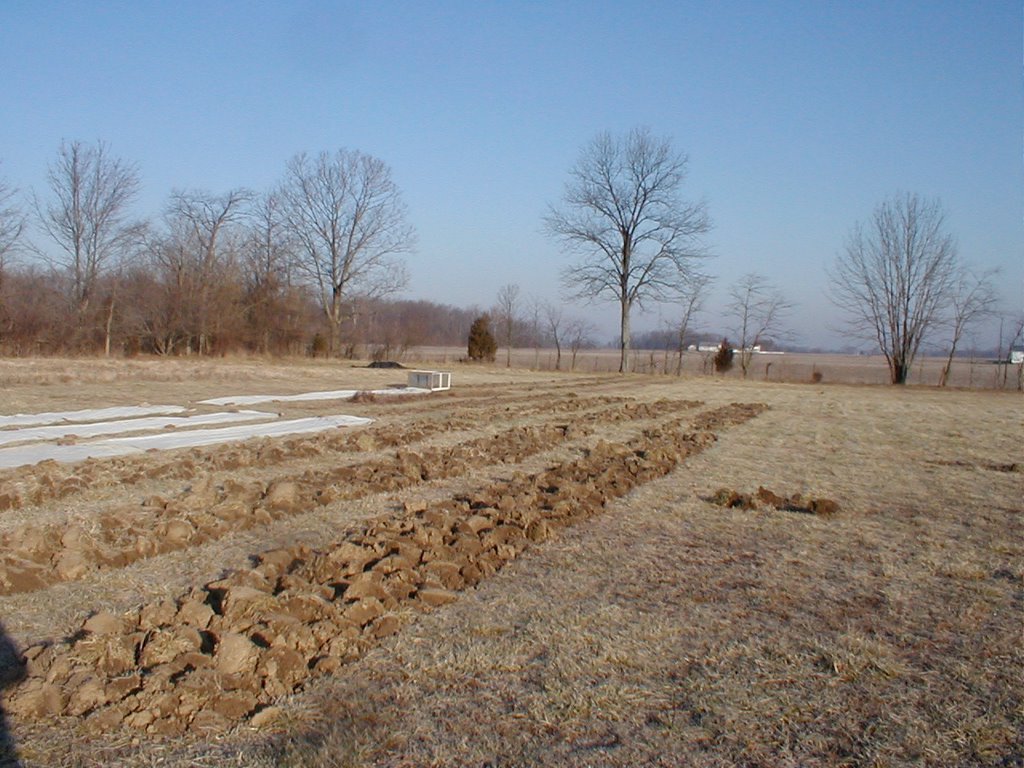
We have been working on opening beds and making a market garden out of the 2.5 acres on the upper field and here is our progress thus far. 18 beds dugs, 6 beds planted with garlic and perennial herbs. A couple of beds are close to being ready for planting (they will likely be planted strawberries or lettuce) and Eugene is opening up more beds as I write this.

The beds looking south. The white things in the upper right of the photo are garlic under row covers


The beds looking north. This time the row covered garlic is on the left

Before and After

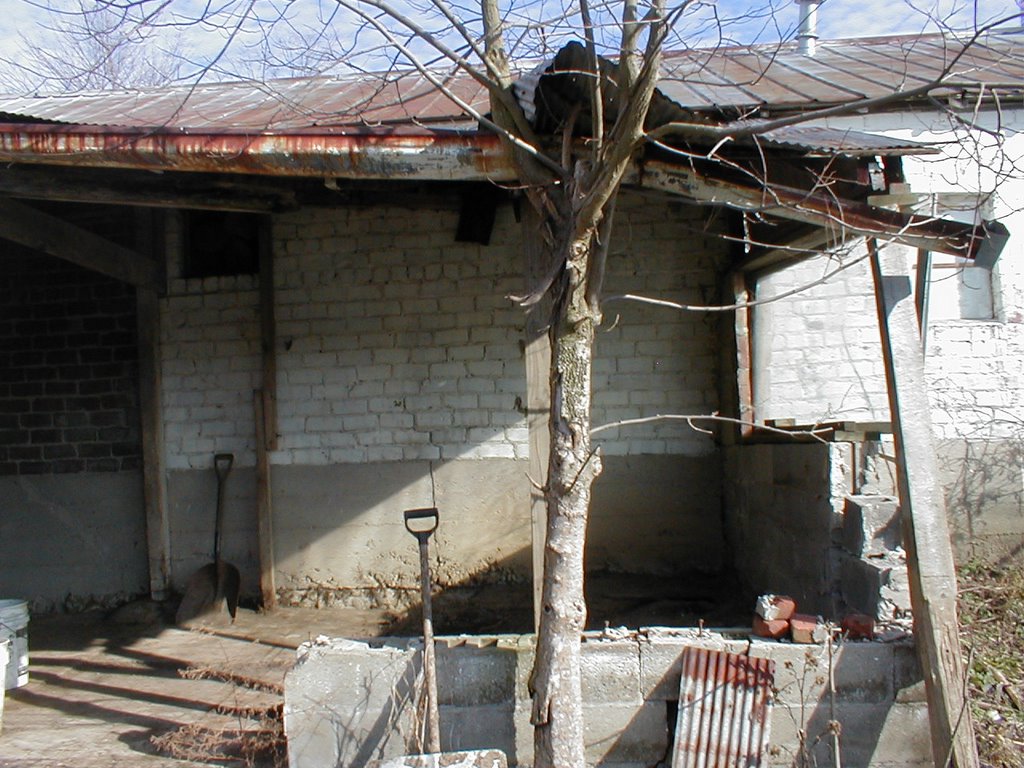
Before demolition. Note how the shed is being held up mostly by the tree


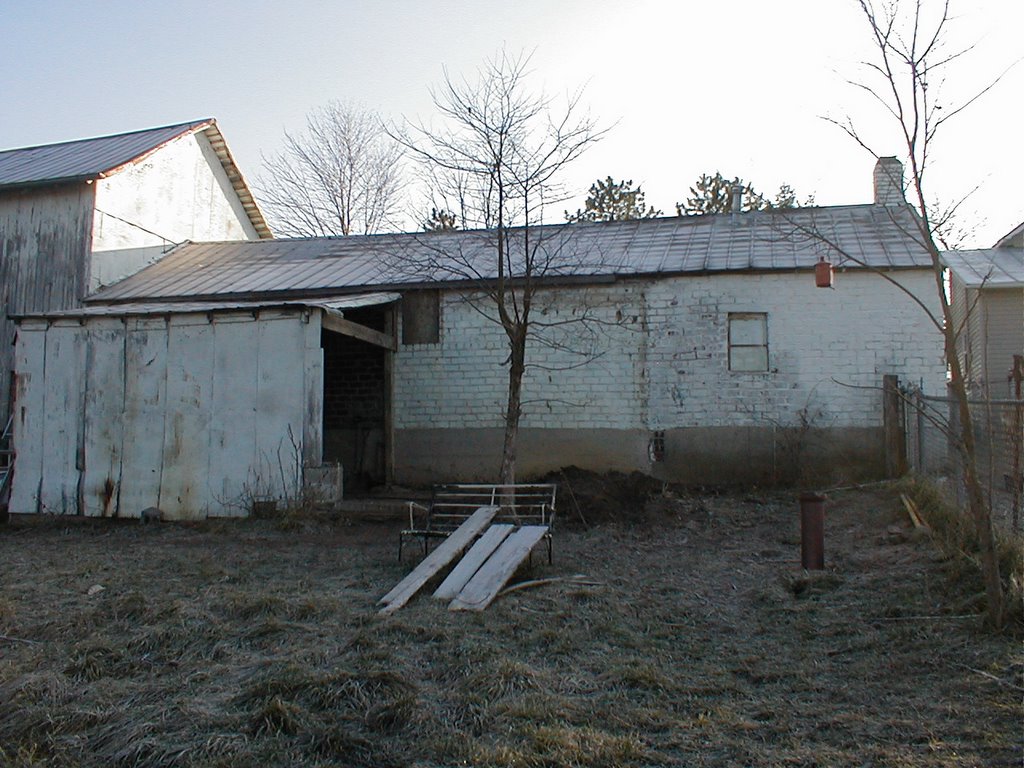
After demolition. Still have to remove the cinder block wall and the the tree but the rest is gone.


The demolition on the broken building is completed and it looks like we will put a greenhouse of some sort there where the shed and wall used to be. The question is what kind of greenhouse? There is no concrete pad in this area , just dirt that needs a lot of leveling where there was a wall and a medium sized tree.

We could build our own structure out of the various wood and metal we have lying around. This would be cheap and Eugene loves this sort of challenge but it will take time to amass all the materials from around the farm and the structure will have flaws that will need fixing. Or we could go the expensive way and buy a kit from a place like Ludy Greenhouses. This will be a lot more expensive but we will have a really nice greenhouse that will not have flaws (of if it does it will also have a warranty) and will likely produce better and will be built in a couple of days rather than a couple of weeks.

Because we have been farming on the cheap for so long this kind of idea, buying a kit, is really alien to us. We tend to buy used equipment at auctions or fabricate it ourselves. This system works and is cheap but is also takes more work and time. And time can be an issue on a farm. If you ar spending time fixing equipment than you are spending time farming. In the winter this is not an issue but the rest of the year it is.

But in the case of the greenhouse we are talking the difference between $500 and $2000. And we know we can build a $500 greenhouse that will last at least 10 years because we already have done it with one on the other farm. And that hoophouse (our first) was out in the open. This one will be built in a very protected area so should not be bearing the brunt of the storms. The old hoophouse often looked as though a giant had sat on it after really heavy winds. But Eugene would go out and spend a few hours fixing the purlins and putting the thing back together and make it all good again.

Ah Decisions, decisions.

We still have not decided what to do with the area of the shed still standing that is on the concrete pad. I think it would be a really nice place to put the forge but it would also make a decent wash rack/packing shed for the produce

Wednesday, January 25, 2006

Farm Sex Most Popular

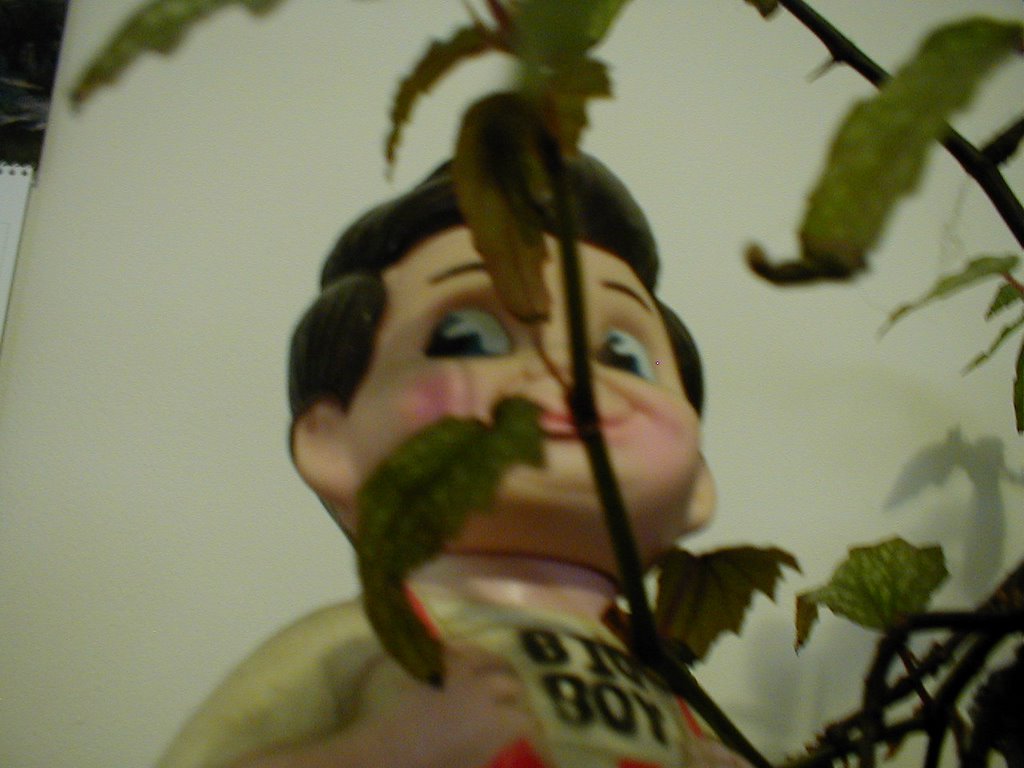
Why is this Big Boy Smiling? Maybe he has discovered farm sex...


Looks like the term "Farm Sex" has been the most popular of the naughty search terms people input to find their way here. Today "Farm Sex" got two hits. For a while Farm Sex was neck and neck with "Sex" and Sex Farm as most popular search term but in the end Farm Sex has won the day with 2 searches and the others with zero.

I'll bet that changes after this post...

Progressive Garlic Powder and Other Stories

Things have been pretty busy around here the past few days, despite the weather being less than wonderful (and the Channel 7 weather prophets said it was going to be sunny and reasonably warm, not snowing and howling winds. Well, global warming does make weather prediction chancy at best).

Eugene has taken down the lean-too shed like thing attached to the back of the barn. The building was a real redneck job I, must say. It had been used as a run-in shed for cattle most recently but before that it was used for storage of stuff (we found doors, furniture, a swing set, shutters, table, patio chairs, etc., etc..). Because cattle were allowed to loaf in the shed while there was still full of items most of the items were turned into firewood and garbage by the cattle. (why don't people think!?). The lean-too shed like thing had a rotten roof that was mostly held up boxwood tree growing up in the doorway, a cinder block wall that was falling and a pile of dirt, cattle shit, glass and the occasional plastic toy. It was considered a hazard by the people who insure this farm. And it was not doing us a bit of good so now the rotten and broken parts are gone and it will become a whole new deal. what it will become I don't know. Probably a greenhouse, though what is left would make a dynamite blacksmith shop as it has a good cement pad.

While all that has been going on these past two afternoons I have been dehydrating things. yesterday I finished up a batch of garlic powder that was already dehydrated (which takes about 5 days to do) but needed cleaning and grinding into powder. While I did that I listened to left wing Progressive radio (Ed Schultz) and got depressed about the state of things. I do not like this Fascist state we seem to be in. And I don't think the democrats are the remedy to the problem (at least they have not been so far). I believe I was lucky that a basketball game pre-empted Randi Rhodes. While I like her rants and views, she can get down right scary and than I have to turn her off.

Okay, so I made progressive garlic powder, which you can buy here, yesterday.

Today I peeled and sliced a lot of apples that were going bad and put them in the dehydrator. It took me about 2 hours to get them all prepared to dry and all I will get out of it is about 1/3 of a pound of dried apples. But the work is well worth it. I like to use the dried apples in granola I make and cooked oatmeal. Dried apples are so danged good in oatmeal.

Now it is almost dinner time and I haven't a clue what to make for dinner. Any suggestions?

Tuesday, January 24, 2006

NAIS Agriculture Facism

NAIS is a system the USDA will be implementing sometime in 2008. Over the past 3 or 4 months I have been reading more and more about this on the web. I have seen a couple of dynamite posts about this issue over on the Cauldron Ridge Blog and the slow food website has a lot of information and good discussion going on in their forum (the two items below are from that website). Personally I am opposed to this idea for many of the reasons stated in the article by Mr Lamb and the response to Mr lamb's article.

Remember eating is indeed a political act.

Henry Lamb is the founding Chairman of Sovereignty International
(1996), and the founding ECO of the Environmental Conservation
Organization (1988). He is publisher of eco-logic Powerhouse, a widely
read on-line, and print magazine. His columns are frequently translated
into Spanish and published throughout Central and South America, Spain,
Portugal, and Italy. He has attended United Nations meetings around the
world, is a frequent speaker at conferences and workshops across the
country, and is a regular guest on dozens of talk radio programs. He
has provided testimony for the U.S. Congress, as well as State
Legislatures, and has served as a consultant to FOX News on U.N.
affairs.

For eight years, he was CEO of a national trade association for
contractors, headquartered in Chicago, coming to that position from CEO
of a private construction company specializing in erosion control and
water management structures. His background includes teaching at the
secondary school level, and serving four years as a legislative analyst
for a county government in Florida. E-Mail: h...@freedom.org

The mark on the beast
By Henry Lamb
http://www.eco.freedom.org/el/20060102/lamb.shtml

January 15, 2006

The stated purpose of the program (NAIS) is to enable government to
trace, within 48 hours, the source of a faulty animal food product. The
effect of the program is the transfer of the control of private
property to the government - while forcing the property owner to pay
the cost of the transfer.

Last week's column asked: "What do you call it when government takes
away the use of private property, but leaves the title in the name of
the property owner?" Dozens of letter writers correctly responded:
"Fascism." Last week's column was about government controlling the use
of land; this week, the government is controlling the use of animals.

The program is not limited to commercial producers; it includes the
half-dozen chickens at Grandma's house. Her "premises" and each chicken
must be registered with the government, as the program now stands. In
fact, the pet parakeet in a cage on the 20th floor of a condo in Miami
Beach must also be registered, along with the premises. As the program
now stands, there are no exceptions.

Surely some of the stupidity will be squeezed out of the program as
more people become aware of it, and insist that government has gone too
far. The question, however, is not how far is too far, but whether
government should go there at all.

Nothing among the enumerated powers granted to the federal government
by the U.S. Constitution can be construed to include the power to
control the use of private property. The federal government is
empowered to regulate interstate commerce, but Grandma's chickens and
Aunt Jane's parakeet do not constitute interstate commerce.

Everyone wants a safe, abundant, and affordable food supply, which
America has enjoyed for years - without a National Animal
Identification System. Why is it necessary now? The increased terrorist
threat certainly justifies tightening up security in the food chain.
But, the NAIS does little or nothing to tighten security, while
imposing ridiculous burdens upon the small producer.

The NAIS was initiated by the National Institute of Animal Agriculture,
a non-government organization consisting of the leaders of
agribusiness. The program they designed tends to shift the burden,
cost, and ultimate responsibility for food safety from the agribusiness
giants to the small producer.

Interstate commerce conjures up images of businesses such as Tyson
Foods, which has mastered the art of vertically integrated marketing.
Tyson controls the production of its chickens from birth to market,
using farmers only to provide space and labor to get their product to
slaughter. Here is where government should focus its regulatory concern
- and leave Grandma's chickens alone.

Suppliers of beef, pork, and lamb, often buy their animals from small
producers, who work hard to raise healthy, marketable animals. The
agribusiness suppliers are free to buy, or not buy, from any producer.
Here, at the point where the product enters the food chain, is where
responsibility, security, and regulatory control should be focused -
not on the already overburdened small producer.

But, no. The NAIS requires the small producer to not only bear the cost
of the program, but also to be the ultimate scapegoat in the event that
an agribusiness supplier's product is found to be faulty, for whatever
reason. Should little Johnny get sick after eating a hamburger made
with beef supplied by BigAgri Packing Company, BigAgri simply points
the finger to the producer, or producers, whose cows were in the batch
from which Johnny's hamburger was made. Agribusiness shifts its
responsibility for buying only healthy product to the farmer, who must
guarantee his animals to be healthy.

The NAIS is an industry-designed program, which will drive small
producers out of business, reduce competition, and ultimately put both
supply and price in the hands of industry giants - unless opponents
of this program get organized.

And here's a reader response to Henry's article from a small farmer...

NAIS: Fascism is what we should call it
By Edward H. Ey
http://www.eco.freedom.org/el/20060102/edwardhey.shtml

January 15, 2006

Henry,

Congratulations on grabbing the tip of the NAIS iceberg. You clearly
understand the essence of the major issues facing small agricultural
producers, and the general public. But - there is a much broader set
of implications that you might want to look into.

The incestuous relationship between agribusiness and the USDA is well
recognized by many farmers and livestock producers. The USDA is no
longer a useful agency for American agriculture. The USDA has become
the conscript of agribusiness. All key positions at the USDA are now
held by former agribusiness people, or their minions.

The NAIS scheme currently has little or no support, among small and
independent farmers and livestock producers. Few to none of my friends
and neighbors have bought into the NAIS Ponzi scheme. We recognize the
sleaze, the illicit design, the unnecessary cost, and the political
intentions of this latest useless offering from Washington, D.C.

Beyond the overt display of tracking animals, the NAIS plan is to be
used by the IRS to verify farmer and producer incomes, and the system
will also become a tool used by agribusiness. The USDA has backed away
from direct implementation of the system, and will use contractors and
private organizations to do the dirty work of installing the system and
collecting the data. The Secretary of Agricultural knows when to back
away from a smelly pig.

So, why is the collection of agricultural livestock data important
beyond the control of private property? The answer is because the
agribusiness giants will then have access to all of the information on
the database. They will have knowledge about all sources and supplies
of commodity animals. They will use such information to improve their
ongoing practice of captive supply and market price manipulation. The
USDA has promised protection of my private producer information, once
its on the database. Right! If anyone believes that, they can see me
about some swamp land I have for sale in Florida.

To gain a better understanding of this menace, you might be interested
in the actions and writings of Mike Callicrate, the actions of the OCM
outfit in Nebraska, plus some of the issues defined by R-CALF other
than BSE imports, and the increasing national trend of small farmers
and producers to form more independent co-op outfits to counter the
threat of agribusiness.

Agribusiness killed the independent chicken and pork industries, and
they are now attempting to do the same thing to independent cattle
producers. Agribusiness and the USDA are successfully depopulating the
Great Plains, but a national range war has begun in the cattle
business, and it's liable to get very nasty, very soon.

Fascism is what we call it, when private property is controlled by
government. Clearly, there is no issue more important for the Supreme
Court to fix than private property rights.

But, what do you call it when multi-national corporations (e.g.
Monsanto, ADM) control all grain seeds, via patents, GMOs, and chemical
controls? I still haven't figured out how a corporation can be allowed
to patent a life form.

What do you call it when all beef is controlled by the likes of Tyson,
Cargill, et al, and imported meat receives the coveted USDA stamp of
approval? What do you call it when all pork is controlled and imported
from overseas by Smithfield?

What do you call it when imported agricultural products grown with
illegal chemicals in foreign countries (Mexico), and imported beef
products contain life threatening contaminants, packing house residuals
(Brazil), and potential disease (Brazil and Japan's BSE threat), and
the government will not implement Country Of Origin Labeling
legislation? Why doesn't the U.S. government want me to know where this
food comes from?

I do not mean to belabor the obvious, with these ongoing real events
now taking place in our country, but you must agree that if one thinks
oil dependency on the Middle East is a major problem, just wait until
our food supply system is controlled by agribusiness, their USDA
puppets, Wall Street, and foreign governments.

The current lobbyist scandals in Congress pale by comparison to what is
taking place in our national agricultural system. Actions now underway
by agribusiness and the USDA will seal the fate of the American family
farm and the American consumer. The NAIS is but one step in the overall
strategy.

Henry, you can render a great service to the citizens of this country
by looking into the rest of the USDA/Agribusiness greasy iceberg, and
reporting on it. I promise that you will find the overall strategy of
agribusiness, and its future plans to control your foodstuffs beyond
belief, and very scary.

No plant diversity, no variations, everything monoculture hybrids, and
no controls on quality, origins, or nutrition should raise major
concerns. But, Americans will likely continue to buy from the "Lowest
Prices Always" businesses that feed on the bottom, right next to
agribusiness and the USDA.

Edward H. Ey
East Branch Farm

Sunday, January 22, 2006

Buying Local in Winter

The farmers' market yesterday was great. The weather cooperated, no rain/snow, the winds died down and the sun came out the last hour of the market. We were missing 2 of 3 bakers. Lyman Peck was there with his clay oven baked bread but sold out in the first hour.

I was pleased to see quite a few greens at the market. In a normal year we would have spring mix, kale and chard in hoophouses but not this year due to having to set up new beds before setting up hoophouses over the beds. No one had those particular greens but there was Harv Roehling's lettuce (I bought two kinds, he usually has between 7 and 16 varieties of heirloom lettuces). Harv has become the Lettuce Guy around these parts because he has figured out how to raise lettuce virtually 12 months of the year using a combination of raised beds and greenhouses. The Suzie and Brent Marcum of Salem Road farm had a lot of mustardy things, several choys, baby lettuce and cilantro for sale.

The meat purveyors were there I bought myself a cow share so beginning in Feb. I will be able to buy raw cow's milk. This is a huge step towards my being able to buy 100% of my food locally. I still do not buy grains and flour locally which I could but they are pricey and not the quality of King Arthur Flour.

I also bought 5 dozen eggs from Karen Baldwin of Tapaahsia Farm (Tapaahsia is the Miami word for Canada Geese). Her family raises some darned fine eggs and she makes really wonderful soap and other skin products by hand using pure ingredients.

Along with buying local foods for our own use we sold a lot of local products ourselves. the carrots and beets are done for the year. I think this is the first time we have managed to sell out of the carrots before they started to really lose quality (generally in march or April). We sold all the parsnips we brought to market but still have more in storage. We sold a lot of garlic but came no where close to selling out.

It was good to see people. We get pretty isolated from Oxford in the winter and having social interaction with people we know is always a good thing. Several of our loyal customers brought us their plastic bags so we can reuse them in our sales. It would be nice if everyone brought their own bags and we did not have to even think about using plastic "Thank You Bags" (this is what they are know as in the industry) but the reality is most do not bring their own bags to market. So we must supply bags for our customers and the most painless way we have found to do this is to reuse bags (something we were prohibited from doing when we were certified organic. Certified organic farms must use new bags only. Not a sustainable rule). And this recycling of bags allows our customers to become involved with us on a slightly deeper level (it's not the level that can be achieved by joining our CSA but it is a small step closer).

I love the farmers' market!

Friday, January 20, 2006

Winter Market pt. 3

Tomorrow is the 3rd installment of the Oxford Farmers' Market Uptown's Winter Market. Starting at 9:30 am saturday Jan 21st in the public parking lot at Main and Church Sts. There will be several farmers and bakers selling what they have.

We are planning to go though, the last market we made under $200. I feel if we cannot make at least $300 per market it is really not worth going, but in this case we are fostering a brand new market so I make an exception for this market. And besides, in the past if we made $25 from produce sales in December or January that was considered good. Of course in years past we had nothing to sell by this point in the year. But last year, anticipating a winter market, we grew a lot more storable produce like winter squash, taters, garlic, onions, carrots, parsnips, etc.. so we have things to sell tomorrow.

What will we be bringing?:
Garlic powder
Garlic
Beets
Carrots
Parsnips
Fingerling and red potatoes
Tomato juice
Apple sauce
Popcorn (this makes the best popcorn!)
Maybe a few winter squash
Red onions
Yellow Onions
Roasted squash seeds (like pumpkin seeds only better)


I don't think we will have much to sell come the Feb. market but I also am predicting we will be getting cold stormy weather by than (or maybe it will be summery by than and 70˚F and sunny-Who knows anymore). From looking at what is left of our stored produce we will not have much in a month. The winter squash is wanting to rot so we have been cleaning, cooking and freezing a lot of questionable squash. Oh, and baking piles of squash seeds. (I have found pumpkin seeds are about the worst tasting of the winter squash seeds. Acorn squash seeds are the best, IMO). I doubt if the remainder will last another 4 weeks. I have noticed even the squashes in Kroger's and Wal-mart are rotting so it must be that time of year already. The potatoes are in short supply as are the carrots and parsnips but we have enough for this market.

My main reason for going to market is to talk to the S***** about joining their cow share program and getting raw milk starting in March or April. It will cost $50 up front plus $4 a gallon for the milk. Raw milk is so much better than the pasteurized pus and drug tainted crap we are offered. Probably will also buy a piece of pastured beef like some sort of steak.

The weather tomorrow is supposed to be rainy but we may luck out and have the rain gone by 9am. At least it will be warm-highs in the low 50's in the morning and than temps dropping through the day. if this were a normal January the temps could have been hovering around 0˚F as the 3rd week of Jan is generally the coldest weekend of the year.

Weather is a huge factor with outdoor markets. If it is rainy, too cold, too warm, too windy than your sales are affected negatively and you could damage product or equipment. I do not like selling outside in bad weather but part of being a business is being there during business hours so it is part of the job to sell in driving rain storms or 105˚F afternoons or, in the case of winter sales, a snowfall.

But in any kind of weather we are darned lucky to have a year round market for our products and the foodies of the greater Oxford, OH area are darned lucky to have a central market to shop for local foods all winter long.

Snow in the Sahara

I heard on the TeeVee newz that it snowed in the Sahara Desert yesterday. First time this has happened in the memory of humankind. Like there are not even any legends that would hint at such an occurrence in the far past.

Climate Change/Global Warming? Yes.

Here at the farm this week we have seen snow, warm sunny days and thunderstorms. If it was March or April I would not be surprised by this kind of weather. We are supposed to have unsettled weather in the spring but not in the depths of winter. in winter we should have lots of high pressure events and lots of cold clear weather. But instead we are about 20 degrees F above average.

This makes me wonder what the spring will be like. If it is this stormy now, we can expect the storms to ramp up much more in the spring. Can you say hail, tornadoes, straight-line winds? Perhaps a late May freeze after several weeks of hot weather.

We will probably be happy that I went nuts and order 3x as much greenhouse plastic as we normally use. Storms with high winds and hail are quite hard on the hoophouse structures. But this kind of weather is even harder on crops and the hoophouses give our crops a lot of protection, even if the hoophouse gets damaged in a storm. and that can mean the difference between success and failure on the farm.