Total Pageviews

Showing posts with label winter. Show all posts

Sunday, December 18, 2011

Putting Together a Winter Share

Harvesting the produce is only half the battle putting it all together into a share is the other half. Once things are out of the field and cleaned up than the produce is ready to be bunched, boxed, etc.. and than put together into shares. The following pictures show how we put together the most recent winter share.

after weighing out and/or bunching or bagging finished items are put into 15 individual piles, one pile per winter share member. So far this pile has carrots, cilantro, leeks dried tomatoes and root parsley

Because our members get what would be a double regular share we had to make 2 piles per member and this is the beginning od th pile #2. We have shallots, garlic and wheat berries


Collard greens bunched and ready to add to the pile. these things are so sweet that the dog stole several leaves and ate them while we were harvesting
Eugene weighing Up potatoes


The piles grow and now we have added beets to this side..

...and spring mix, collards, kale, broccoli and parsley and a bag of lettuce. And there are 3 boxes of winter squash one has butternut, one has delicata and one has acorn. they got one of each kind in their shares

Pears and spinach have been added

Close up of 1/2 of a finished share with the potatoes added to the pile

and here is the other half, it's a lotta food

Eugene is doing a final check of the shares to make sure we got everything just right.

Wednesday, December 14, 2011

We are in Acres Magazine!!

A couple of months ago a woman contacted me about doing an interview for Acres USA about storing food/winter CSA's. I said I would certainly be interested in being interviewed and a week or so later sent me a bunch of questions via email, I answered them. She sent some more a bit later, I answered those and below is the result.

I have long wanted to be in an Acres article and now it has happened. Life is good.

I did leave 1/2 the article out of this post as it does not concern Boulder Belt Eco-Farm and not important (and if you want to read the entire article you will have to buy a copy at a place like TSC).

I'm pleased with the article and I hope you are too. Enjoy

Printed in the Dec 2011 issue


Friday, December 09, 2011

A Winter Harvest

Harvesting some crops in the snow for our Winter share members.


A bed of spinach.


Freshly pulled rutabagas


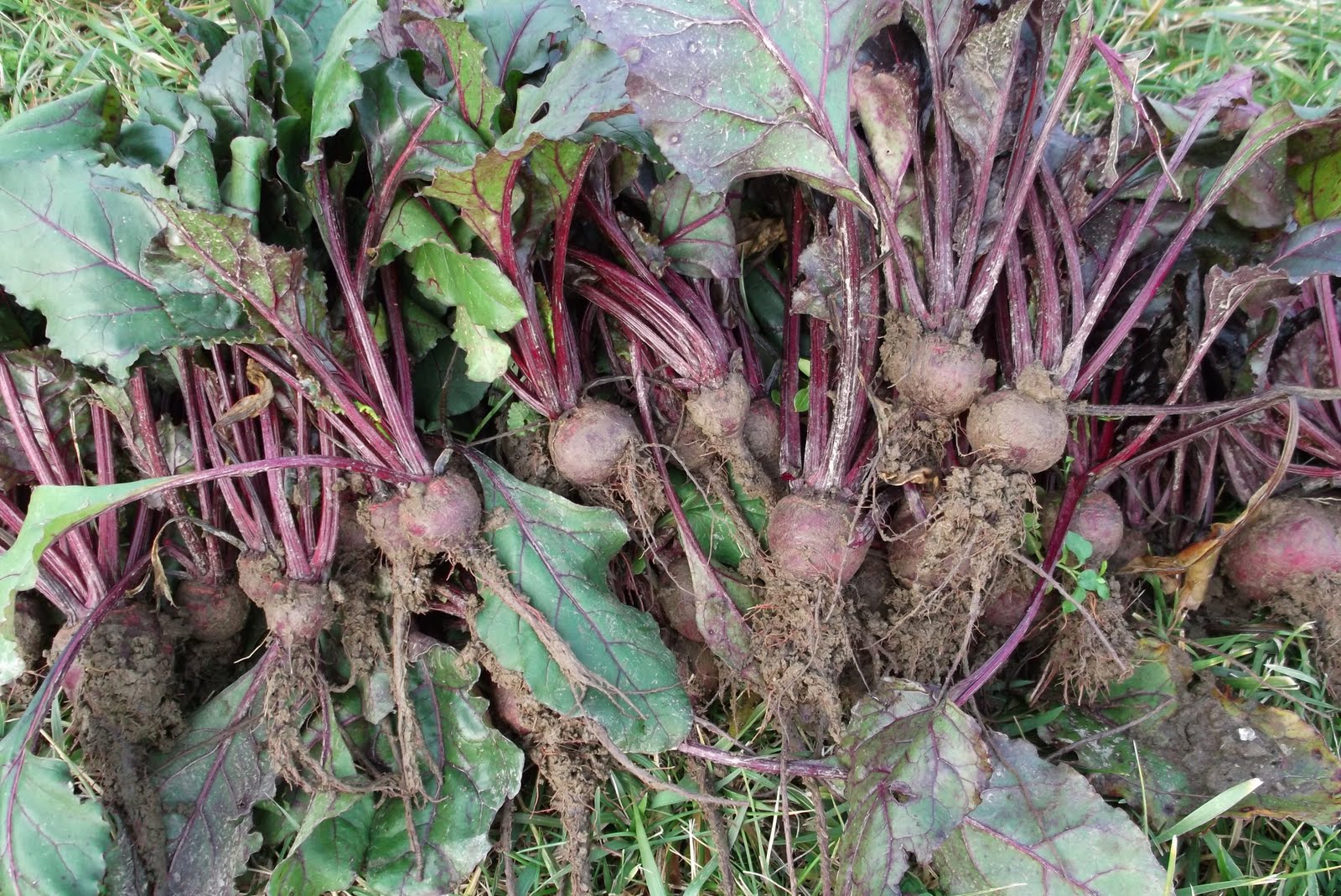
Freshly pulled and very dirty beets


A beautiful head of red oakleaf lettuce in among some red beets


Meg and Eugene harvesting rutabagas. The white specks are snow flakes


Harvesting Broccoli in the snow. Note the row cover That Meg is lifting off the plants so we can harvest that bed. It is because of that row cover that we have any broccoli at all. it kept the environment just warm enough and wind free enough that the broccoli heads did not get a lot of damage. If the had a hoop house over them they probably would have had no damage but even with just 2 layers of row cover on hoops we had 2/3rds come through a lot of nights in the mid 20's A-OK.


Fresh broccoli with leaves. The leaves are very good to eat.


A panorama of the farm shot from the NW corner and looking South, southeast


Dirty Daikons


Clean daikons


and Leeks

Friday, March 04, 2011

Blackberry Winter

Winter is the time to clean up beds of perennial plants. We took a nice morning in late February to start cleaning up our blackberry beds. What we did was cut out all the dead canes that produced fruit last year. Next we have to get the primocanes into shape bit that is work for another day


Eugene cuts old growth as close to the ground as he can


The berry patch


Carrying the dead canes away. We never leave the debris behind as that can lead to pest and disease problems as well as clutter which can badly impede work efforts


The final resting place for the dead canes. The burn pit where they will be lit on fire and all the potential pest and disease problems will go up in smoke

Thursday, February 10, 2011

The Depths of Winter

It's cold and icy and there is not much farming to be done right now. This morning at 6 am it is hovering around zero Fahrenheit.

It is way too early to start most of the seeds. we have onions growing in the seed room and should start some leeks this week and shallots as soon as the seed comes in.

It is way to early for tomatoes, peppers, melons, zucchinis, etc but I suppose we could think about starting lettuce, kale, chard and other cold hardy greens inside this week so they are ready to go in a hoop house in 3 to 4 weeks.

We do have quite a bit of pruning to do but right now the conditions are bad-ice all over the ground means that you cannot use ladders safely nor can you cut out raspberry canes.

So we sit around doing non farming things (lots of baking, deep house cleaning, watching movies, playing with the cats, taking long walks in the snow, removing ice from all surfaces, snow shoveling, reading, blogging, etc..) and even being a bit bored.

We will savor these quiet days when we are too busy for sanity (and it is hotter than Hell as well)

Thursday, December 30, 2010

Harvesting a Winter Share

We here at Boulder Belt Eco-Farm have been doing the CSA (community Supported Agriculture) thing for over 12 years and for the past 4 years we have done a Winter Share. This year's winter group is quite small at 5 members. In past years we generally have 10 to 15 members and I was really hoping to do 20 this year. But due to the drought that hit us this past summer our winter storage crop harvest, especially the winter squash, was badly compromised. And it also made it very hard to do the late summer and early fall planting we must do in order to have crops to harvest in December and January.

We did a lot of hand watering this past fall and we ran the irrigation system a lot more than we were comfortable with (all water, including the water we use for household stuff comes from the same well-we do not want it run dry, ever). But it all paid off and we have been successful in growing enough food for our 5 Winter Share families (but not much more than that)


Eugene is harvesting Broccoli Raab (which taste nothing like broccoli, FYI) For the winter share. I picked most of it but since I own the camera I take the pictures. The purple leaves are rainbow kale. Normally the harvested leaves would be washed, than refrigerated before being bagged but our washing facilities are outside so in winter we generally skip washing and have no need to get the field heat off of the crops (if anything they need to be thawed) so they can go from field to bagging in one step.


Same broccoli Raab bed with the cover being put back on. We use row covers inside the hoop houses because it gives another layer of protection to the crops to keep them from freezing. Unfortunately the two row covers and being inside the hoop house was not enough for the broccoli raab and there was a lot of frost damaged leaves that had to be taken off the plants and tossed out. This is always the risk with winter growing-bad frost damage. We do try to avoid this by planting cold hardy crops, using row covers and hoop houses and putting heat sinks in the houses such as gallon milk jugs filled with water, 50 gallon containers filled with water, etc..


One of two beds of leeks. The leeks will survive out side of a hoop house but we have found the quality is a lot better (by orders of magnitude) and inside the hoop houses it is warm which means the soil is not frozen so we can get them out of ground. Even in the hoop house the leeks come out of the ground muddy and have to be cleaned up. I don't wash leeks as washing seems to bring down the quality. instead I cut off the roots (where most of the mud resides) and than I strip off the outer layers which are dieing off, et voila! Clean leeks. Our Winter Share members got 2 leeks each.


One of the two spring mix beds. This one has the mustard greens-arugula, mizuna, tat soi, etc..


The lettuce side of the spring mix. In winter due more to under 9 hours of day light rather than cold, the plants go almost dormant (if it is really cold and dry they will go completely dormant in Jan and Feb) which means very very slow growth. this means in order to harvest in order to sell the crops a couple of things must happen. One, the crops have to be planted at the optimal time so they are well established and at the size you need. With some things like spring mix the plants can be either too small or too big. With other things like broccoli raab and kale you want to avoid the plants being too small or there will not be much to harvest. Two you need to plant more than you would in spring/summer/fall because things are not growing much if at all so in order to get enough to harvest you plant more area.

Now this works very well in early to mid winter but in late winter we get our light back and the hoop houses get really warm, especially on sunny days so even though it may be a cold snowy March day outside the hoop houses, inside it is May and things are growing great guns and all that over planting so necessary in the depths of winter becomes too much of a good thing. So our solution is to simply move the hoop houses off of such crops and on to other things and that gives the over abundant crops a good dose of weather reality and they tend to slow way down.

In the end we were able to harvest enough spring mix for 6 big bags of salad (that would be almost 1/2 pound). 5 went to the winter share members and 1 went to us. We also harvested beets and chard from the 3rd hoop house but I took no pictures, even though the chard was very beautiful.

Tuesday, February 23, 2010

Wednesday, February 03, 2010

Winter Farm Fun

I had a spring mix order to fill for tomorrow so that meant going up to the salad house and seeing what there was to cut. So Eugene and I went up to see what's what and among other things, found buried in the area that is supposed to have onion seedlings a deer leg. Nice.


So he moved the leg out of the garden and we proceeded on to the salad house, went inside and found it nice and warm-a good 10 degrees warmer than outside. Nice conditions for the arugula, lettuces, mizuna, mustard and weeds growing in there.

We keep row covers on everything to keep the risk of frost damage down and so far this winter it has worked well. Though, in past winters, even with row cover and gallon milk jugs acting as heat sinks, we have had major damage to the crops. But not this year and it has been real nice to be able to eat fresh greens in deep winter. But using row covers means we have to remove them to work the beds

and That is exactly what Eugene is doing here, removing the cover over the arugula and mustard bed. And you can see the beds beyond him and next to him have no covers over them because I took those off so I could cut greens.


While I cut Eugene hoed. Even in winter we have to do some weeding. But the weeds and crops grow slowly so it is relatively easy to keep up with them. This arugula/mustard bed was not too bad and the soil was dry enough to work


But this lettuce bed to the south of the arugula/mustard bed was quite wet and hard to hoe. But it has to be done before these weeds all flower and go to seed


and you can see already some of the winter hardy weeds are beginning to flower. That is because in the hoop houses it is already late Feb/early March.

So for about 30 minutes we hoed weeds and cut salad. I harvested a pound of spring mix in that time. In warmer months I would have easily harvested 15 pounds in a half hour of cutting and within 10 days the cut beds would have grown back. This time of year it takes about 8 weeks for the greens to grow back. though this will change in a matter of days, by mid month the crops in the hoop houses will have broken dormancy and will start growing again.


About the time we were all done with work in the hoop house and were debating whether or not we should call it quits or not (there was a little bit of hoeing that could have been done) betty makes the decision for us by appearing outside the hoop house-we heard a noise and the next thing we see black paws on the side of the house. Betty had escaped from the fenced back yard. how? We do not know.


So we leave the hoop house taking our harvest and tools with us and see what Betty is up to.


Betty is hunting mice because she remembered that yesterday she caught her first vole right out side this hoop house and she hoped to get more (and she will in the fullness of time). So We let her poke around the perimeter of the hoop house for a bit than eventually went back to the hiuse. okay Betty and Eugene went to the house and I went to the store to bagged the Spring Mix for tomorrow's order.

Tuesday, January 26, 2010

Seed Buying

One of the big events in winter for us farmers is the seed order. Since we garden on acres this is a far larger undertaking than when we did home gardens. Ordering has happens much earlier for us growing commercially than for home gardeners. In fact we get our commercial catalogs about 3 weeks earlier than the home gardener catalogs (we know this because several of the companies we use have both). So in mid December we get our first catalogs-Johnny's and Fedco Followed by Seed Savers Exchange. A those are the 3 main companies we use for our seed supply.

There are a whole lot of companies we will not use due to the fact they source most of their seeds from companies owned by Monsanto (Peto and Semenis seeds). Jung's is one of them. Okay, another big reason we will never ever buy from Jung's Seeds ever again is they have sent us a lot of horrible plants and seeds. The rhubarb we got from there all died within 12 months, 95% died within 3 months. Than there were the trees they sent us last year that should have come in March or early April but cam in mid June and all but 1 were dead. We also do not like the policy of no refunds, store credit only. And they have bought up a lot of smaller companies (that people think are still independents) such as Totally Tomato
Vermont Bean Seed Co., Burpee, Cook's Garden, Earl May Seeds, Gardens Alive (not really a seed place they are more into fertilizers, pest control, etc.. and used to be a really good place to buy organic inputs), Lindenberg Seeds, Mountain Valley Seeds, Park Seeds, T&T Seeds, Tomato Grower's Supply, Willhite Seed Co., Nichol's, Rupp, Osborne, Snow, Stokes, R.H. Shumway, The Vermont Bean Seed Co., Seeds For The World, Seymour's Selected Seeds, HPS, Roots and Rhizomes, McClure and Zimmerman Quality Bulb Brokers, Spring Hill Nurseries, Breck's Bulbs,
Audubon Workshop, Flowers of the Month Club, Wayside Gardens, Park Bulb's and Park's Countryside Garde.

I also have quit buying seed from Baker Creek because they have send too many wrong or poorly bred seed. This is a shame because I really like Baker Creek. they are independently owned, they do not sell any GMO seed nor source with companies that do. All things that are important to me. but the seed quality for the most part sucks and in my market garden I have to have good to great seed quality and the seed should match up with what it says on the packet. I would say with Baker Creek, 3 out of 5 times there have been mistakes on their part.

Now savvier readers will note I order from Johnny's Selected Seeds and that Johnny's does indeed source some seeds from Semenis/Peto Seeds (though I hear rumors saying they have stopped or will stop buying from these corporations). The reason I make this exception for Johnny's is because I have been a happy customer for over 15 years, the seeds are top flight. There are very few mistakes made and when they happen they always make good, often within hours. they are an employee owned independent seed house with inhouse seed breeding program that is second to none. They are an official AAS trial site because of their location and great breeding program and they have one of the best seed catalogs in the world. And they have signed the Safe Seed Pledge (This link has a list of all the seed houses that have signed this pledge in 2009).

Around Christmas time we get the first catalogs (Johnny's first than Fedco a week later and finally SSE) and we start looking through them and also looking at the list of seed needs I complied last year as we used up the seeds (this is something that I had not done before 2009-or if I did I lost the list before seed ordering time. This saved a lot of time and made the order far more accurate than in the past). this year Eugene did the order and I was the one who got to put the orders on the order blanks, check to make sure we got everything (we never do and this year has been no exception. IIRC we still need a few tomato types) and than the order is calculated, checks are written and than everything is put into the correct envelopes, stamped and sent out.

This year Johnny's got $193, Fedco $207 and SSE $17.50. I know we still have to order strawberry plants which will be another $75 or so. And there will likely be other orders for seeds due to various reasons. And believe it or not this is a relatively small seed order for us. Many years we spend over $600 on seed alone (and several thousand on other inputs and equipment).

After the orders are dropped into the mail box at the Post Office we go home and sit around and await the incoming orders.

As per usual, Johnny's was the first to send us our order. About a 10 days ago the UPS guy delivered a box full of seeds and we were happy. We took the box inside and went through the seeds and found 3 kinds on back order. But within 3 days those seeds had also arrived at the post office. After the Johnny's order came the Seed Saver's order of heirloom tomatoes arrived. And yesterday we picked up the Fedco order at the post office. Or at least the majority, as many things are on back order and one thing was out of stock Even'star American Rapa which seems to be something for spring mixes so not a big deal that there is none. Besides I contacted Fedco and asked if they could send Hamburg Parsley instead of a refund and they said certainly (because they are flexible like that). one thing i am very happy about is the fact our onion seed arrived yesterday. You see CR Lawn, Fedco's founder always includes a newsletter with the order and he wrote that 6 varieties of onions have been on back order but during his writing 3 types arrived at their wearhouse and thus Fedco was able to fill some of their onion orders, including ours. This is important because onions (and leeks and shallots) really need to be started by Feb 1st for best results. It really sucks to see the term "Back Order" next to the seeds you need early as possible (and it is even worse when there is a note stating those seeds will not be available for 2 to 3 months and you already know there are none to be had anywhere because you already checked out 15 different companies for the variety-this happened to about 10 years ago mainly because we were not ordering our seed early enough, so we got smart and got into the habit of ordering early in the year).

Now that we have our seeds let the planting begin! And it will today with onions, leeks and shallots (and maybe kale and lettuces too).

Friday, January 08, 2010

Winter Garden Video


A short movie of the Market garden January 8th 2010 going from west to north to east. The first thing you see is the rhubarb patch than dormant raspberries. Next is the salad Hoop House than many beds covered in snow. Than brown asparagus fronds and behind that a hoop house that has leeks in it. More beds than the hoop house with spinach than more snow covered fallowed beds, the highway, the back of the store off in the distance and we are done

Thursday, December 10, 2009

Wintry High Wind

Yesterday winter came storming in. The day started off with thunderstorms-thunder, lightning, heavy rain and heavy winds. By dawn the rain and thunder had moved eastward. The winds picked up so that by 9 am they were howling and we were getting gusts over 50mph with sustained winds around 30mph.

it was farm share day as well but since we were aware that the weather would be less than ideal for harvesting I got in what I needed the day before in cold but much calmer conditions. Eugene, on the other hand decided to get in kale, cabbage, red turnips and broccoli before the big freeze occurred.

Personally I avoid harvesting in high winds as the winds can do a lot of damage to harvested crops, especially to leafy greens if they are not well covered. I use towels to cover the harvest and they are not always easy to secure to the picking crates and will blow off (I have yet to have one blow away). But sometimes you cannot avoid unpleasant situations and this was one that was unavoidable.

So the morning was spent harvesting things that did not have enough protection to get through a 17F degree early morning. By around noon more and more time was being spent trying to keep the plastic on the hoop houses tight. Eugene was also spending way too much time trying to keep the row covers on beds-this will not work unless one takes about every row cover rock we have and puts them all on the 15 or so beds we have covered. Even than a lot of the covers will come open in high winds or rip themselves to shreds. In the past I would simply go and open all the covers and secure them to the ground so they cannot harm the plants they are protecting by being blown around in the wind.

This time I did not do that because Eugene thought it was a bad idea. And he was correct on that. if the covers were removed yesterday right after a rain even they would have ended up folded and frozen to themselves and the ground and would have been useless to use until the outside temp went above 32F. So now we hope that the covers did not blow off the beds and stick to the ground (but it looks like we will be well above freezing in a couple of days so we can use them again very soon)

After lunch (temp around 34F) I got to work putting together the shares for the Winter FSI and Eugene went out to harvest turnips. I could hear the hoop houses snapping and growling in the wind but up until 2:30 they all seemed to be staying together. I went back in the house around 2:30 and thought I had nothing much to do with the rest of the day. I reveled in that delusion up until 3:30 when Eugene came in and said he had to warm up for a while and than go back out and take in the rutabagas.

I looked at him and said "rutabagas? You mean the rutabagas in the hoop house?" he replied" yes the rutabagas in the hoop house". Than I said "I take it the hoop house is no longer covered with plastic" and he replied"pretty much".

And with all that I found a hat and gloves and put on a work coat and we went and pulled and topped rutabagas. it was interesting working in an area that was quite warm under an hour before we got there. The soils were still warmish when we started but but by the time we finished they were freezing up. As were the greens on the rutabagas, they looked so sad. The same could be said for the broccoli in the bed next to the rutabagas that had been coddled and protected up until yesterday afternoon. Fortunately we were pretty much done with the broccoli so its' demise is not a big loss.

And with the plastic off it will make it a lot easier to clean out the beds with dead green beans, dead broccoli and a scant few rutabaga runts. Than we can fill the beds with the lettuce seedlings we have ready to be planted somewhere. I don't know if that is what will actually happen but right now it sounds like a pretty good idea.